Most people spend their whole trip at the water's edge. The villages are where the island actually lives.
Milos isn't one place. It's a dozen small worlds scattered across 160 square kilometres of volcanic rock — hilltop capitals, sleepy fishing coves, a working port that never quite stops, and an old capital the island simply walked away from. You could spend a whole trip at the water's edge and call it perfect. But the people who go home genuinely changed are usually the ones who took the time to wander the villages too.
So here's where to start — beginning with the one you'll be waking up in — and where to go next. We've saved the island's wildest traditions for the end: time a visit to Greek Easter or mid-August and you'll see Milos with the lid off.
Where you'll be waking up
Your Home Base
Trypiti
Hilltop village · where Efi's is
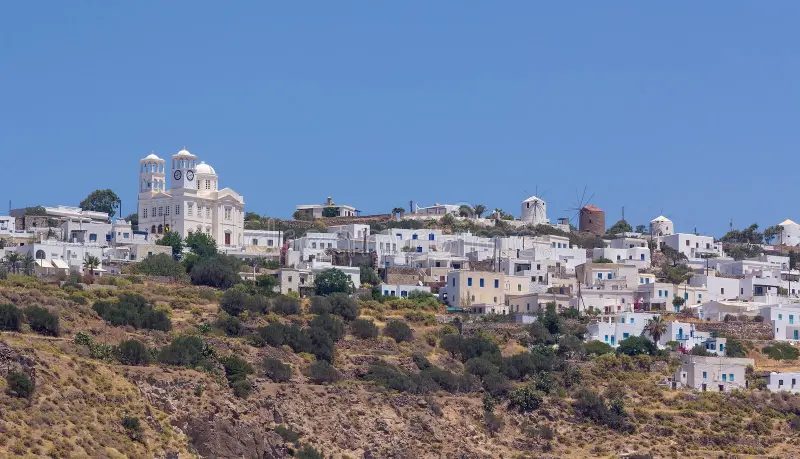
Let's start here, because some evenings you simply won't want to leave. Trypiti is a small hilltop village perched just above Klima, less than a kilometre south of Plaka. Its name means roughly 'the one full of holes' — a nod to the soft volcanic rock beneath it, honeycombed with ancient burial chambers and tunnels. Narrow cobbled lanes, a row of old windmills on the ridge (now restored as rentals), and a handsome church at its heart.
There's a hidden little square tucked between two buildings on the main lane — old lampposts, a few benches, and a view that drops straight down over Klima to the open sea. A couple of tavernas set their tables out in the evening, and it becomes the kind of place you stumble into, sit down at, and don't leave until the light has gone.
The headline villages
The Ones Everyone Knows
Plaka
The capital · ~1 km from the house
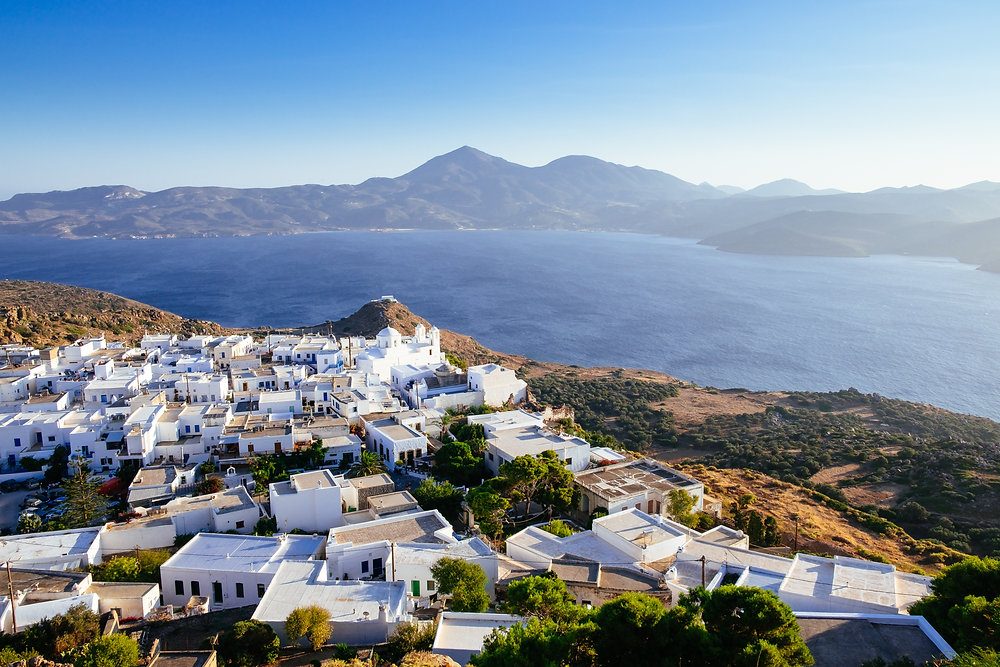
Plaka is the island's capital, and it wears the title beautifully: whitewashed alleys, bougainvillea spilling over doorways, little boutiques and galleries, and a Venetian castle — the Kástro — crowning the hill with views clear across the island. The Archaeological Museum here holds a full-scale cast of the Venus de Milo.
The sunset from Plaka — from the marble terrace of the Panagia Korfiatissa church, or the castle ruins just above it — is the most celebrated on Milos for good reason. It's also home to some of the island's very best tables.
Pollonia
Northeast tip · ~25 min by car
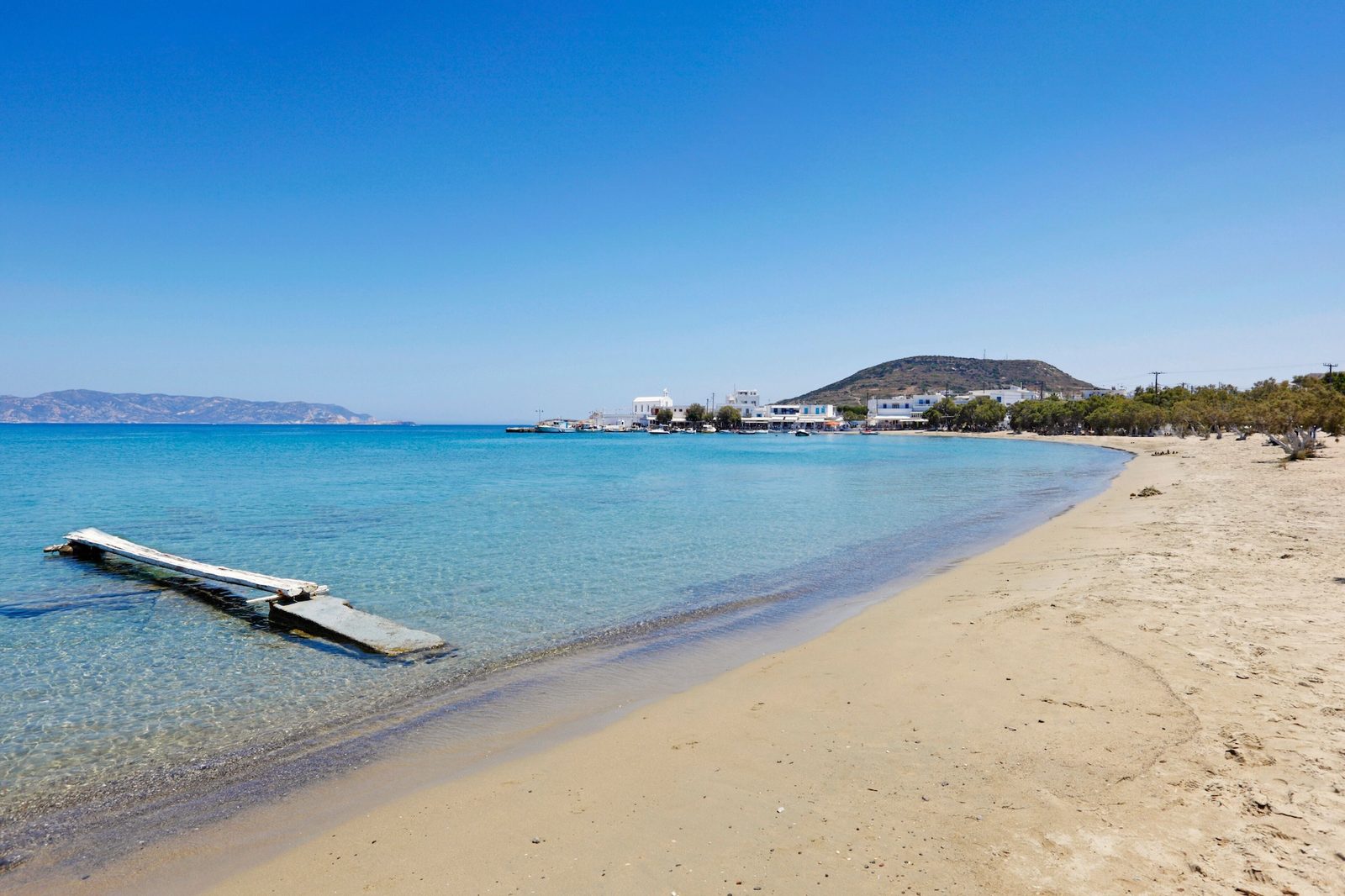
On the northeast tip, Pollonia is the most relaxed village on Milos: a sandy beach, fishing boats bobbing in a small harbour, and a long line of waterfront tavernas that make up the best dining scene outside Plaka. It's also where the little ferry to Kimolos departs, several times a day.
Just outside the village sits the only winery on Milos open to visitors — an easy, lovely addition to a slow afternoon here.
Adamas
Main port · ~15 min by car
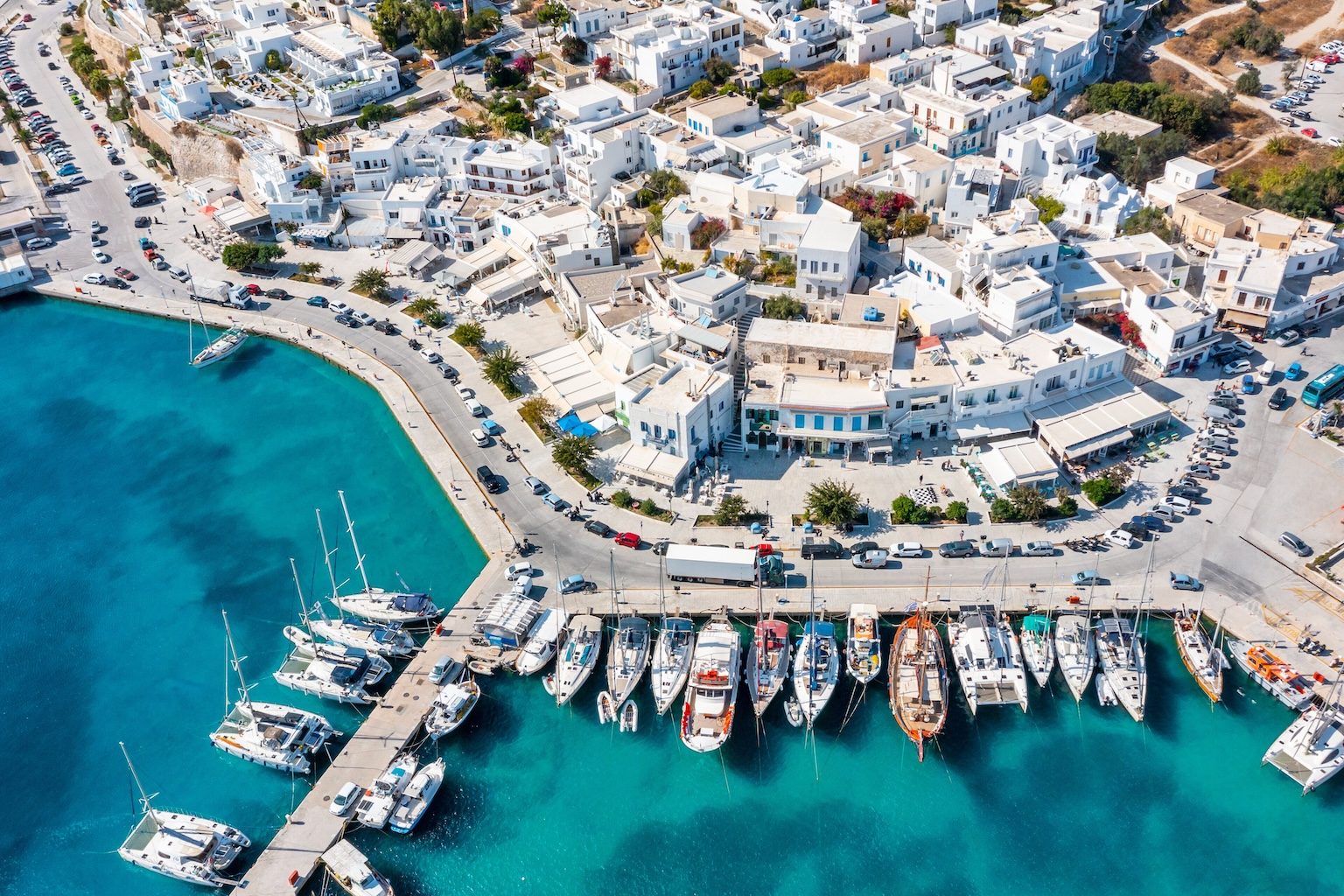
Adamas is the island's front door — where the ferries dock, where most boat tours cast off, and where you'll find the densest run of shops, bakeries and services. It's lively and practical rather than postcard-pretty, but the waterfront makes for a pleasant evening stroll and the food is good.
Think of it as the island's engine room: useful to know, worth an evening, but not quite where the magic lives.
Down at the waterline
The Fishing Villages Worth Slowing Down For

Klima
Below Trypiti · ~40 min on foot
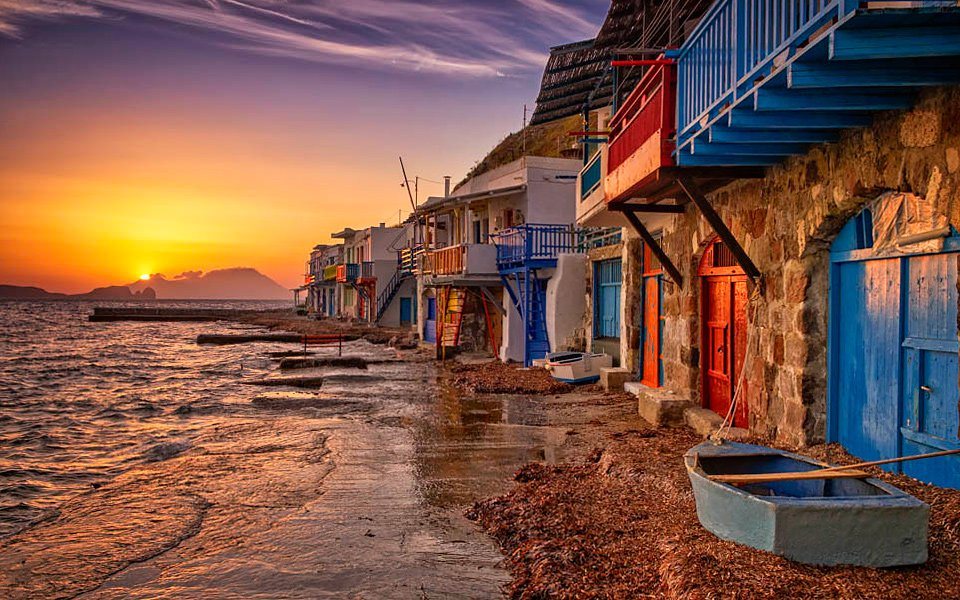
At the bottom of the path from Trypiti sits Klima — one of the most photographed places in all of Greece, and the moment you see it you'll understand why. Two rows of traditional two-storey sýrmata (the old boathouses, with the boat kept below and the family above) line the shore in faded blues, ochres, reds and whites, built so close that the water laps at their doors.
Walk the shoreline, swim off the dock, eat at the taverna right at the water's edge. Klima is lovely at any hour, but at golden hour the boathouses catch a light that's genuinely hard to put into words.
Mandrakia
North coast · ~15 min by car
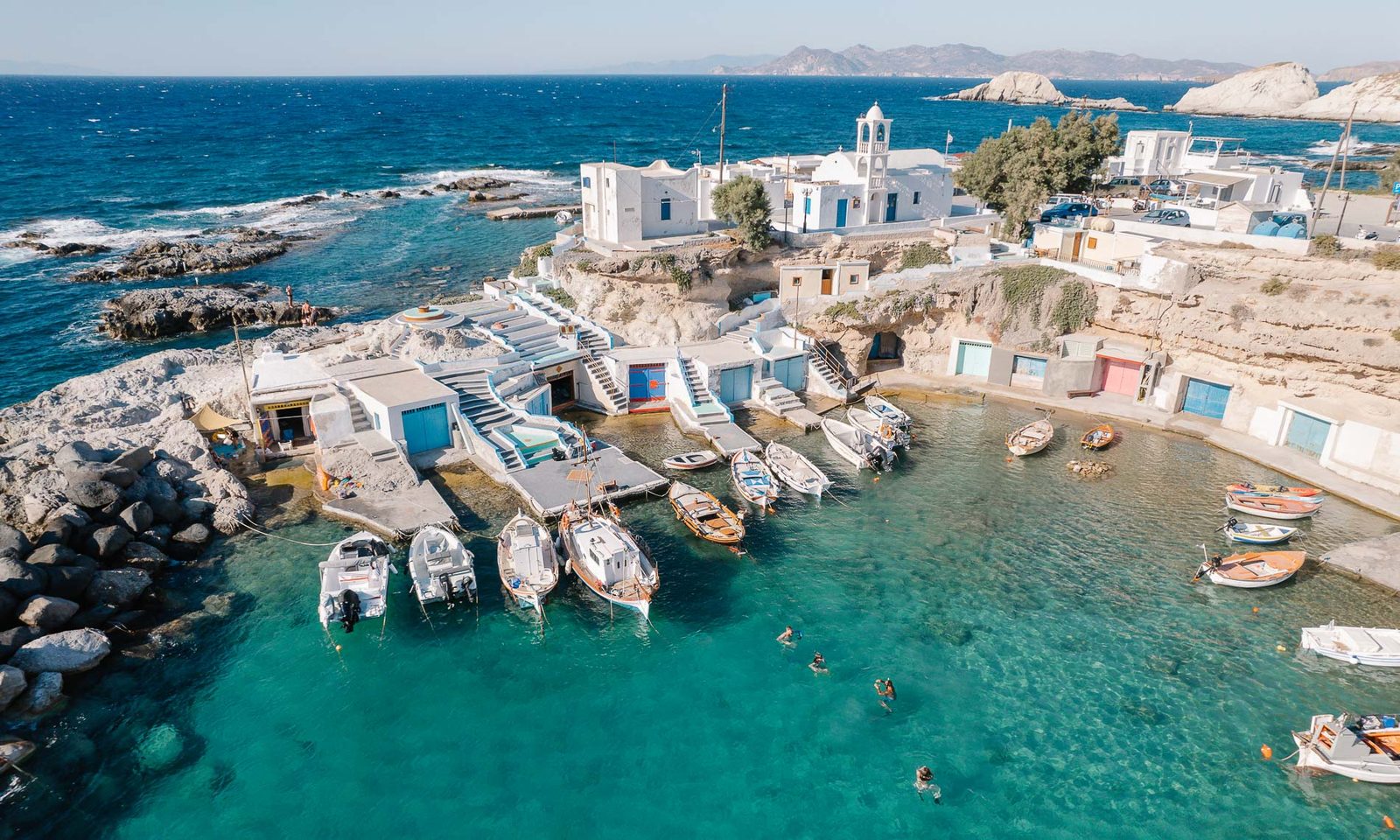
Smaller and quieter than Klima, Mandrakia sits a few kilometres along the north coast: the same colourful sýrmata, a little church right on the water, and a taverna perched at the cliff's edge above the bay that many call the best on the island.
Come for a long lunch, watch the afternoon light shift over the fishing boats, and plan to stay longer than you meant to.
Firopotamos
Northwest coast · ~12 min by car
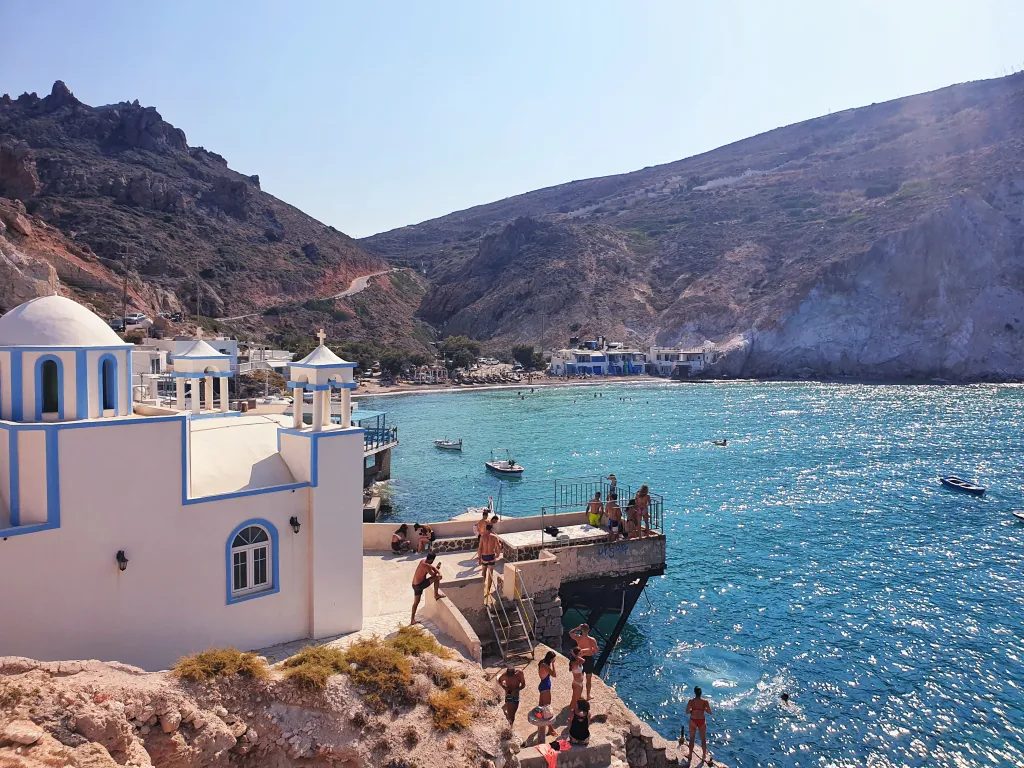
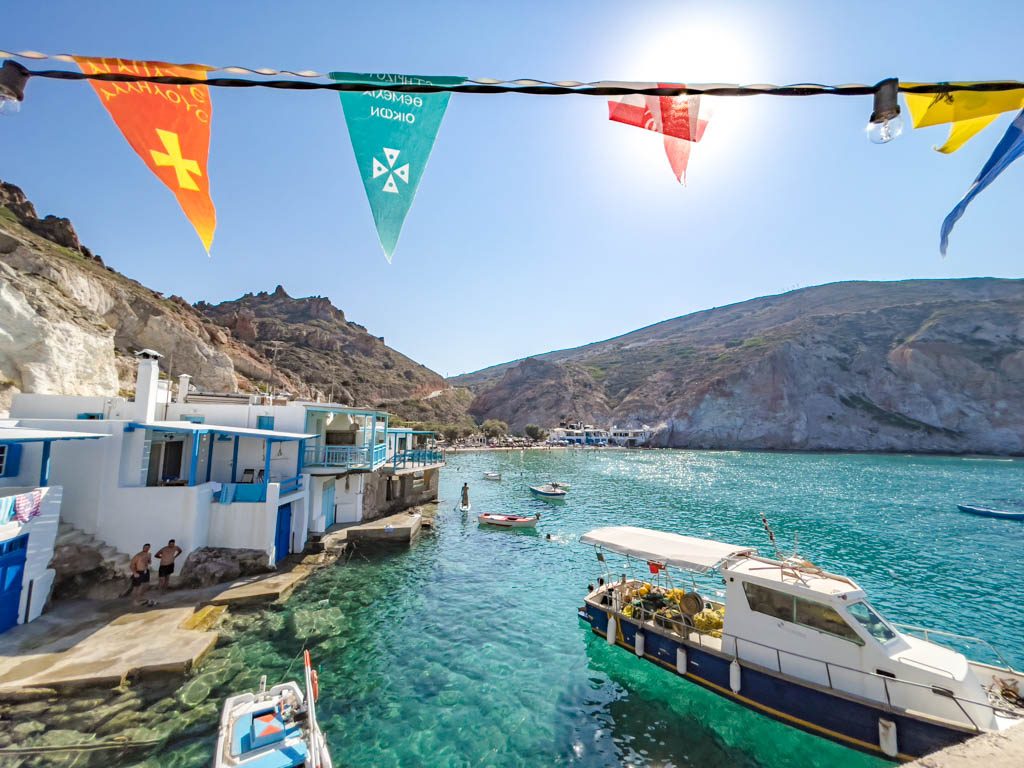
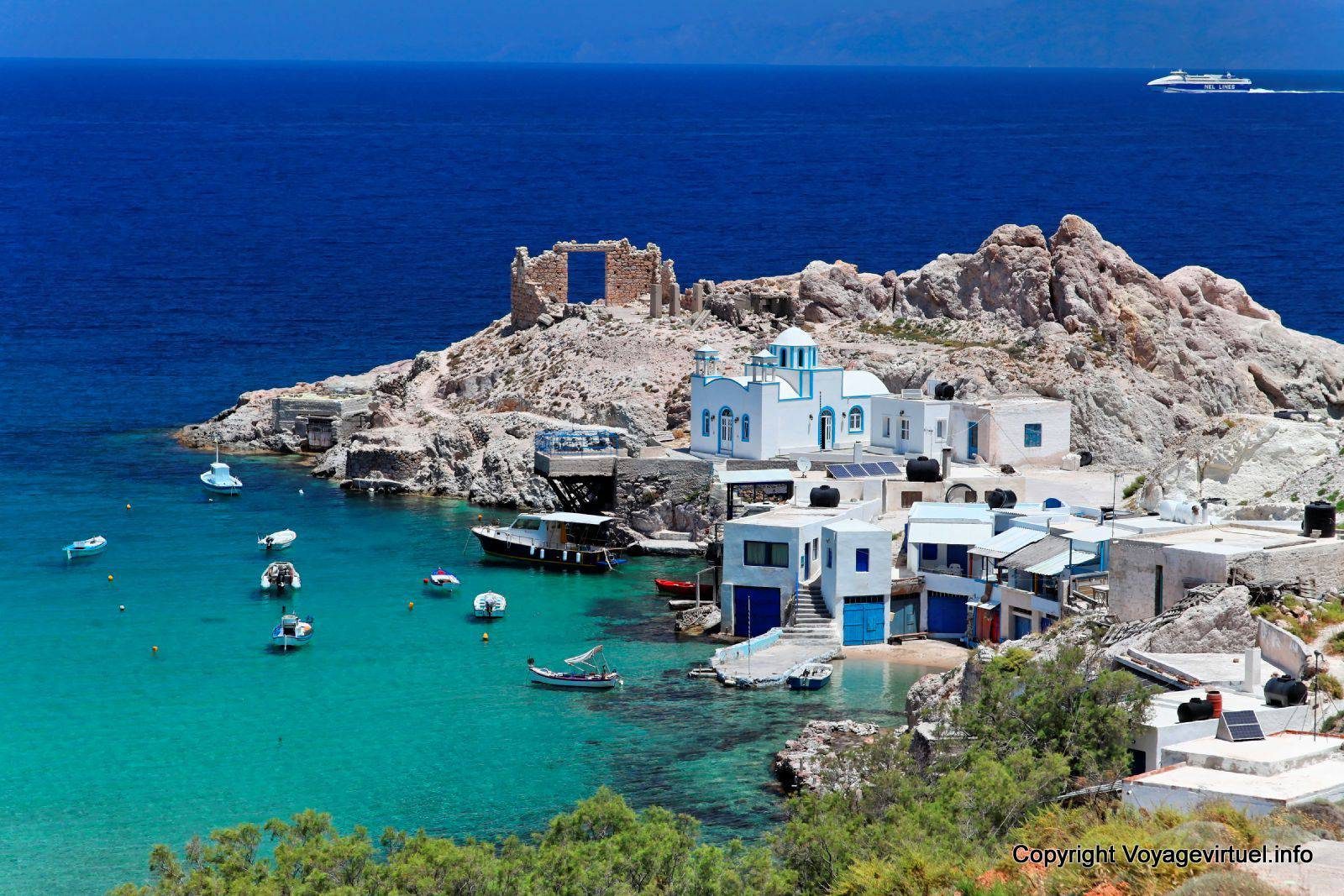
Firopotamos doesn't get half the attention it deserves. A sheltered northwest bay ringed by boathouses in faded white and blue, with a tiny chapel out on the rocks and water so clear it barely looks real. The little beach is a mix of sand and pebble, and there's a small stand for a cold drink when the afternoon gets serious.
It's the kind of place that still feels like a secret even when it isn't — calm, photogenic, and somehow never busy.
The island's ghost town
The One Most People Drive Past
Zefyria
Inland · ~20 min by car
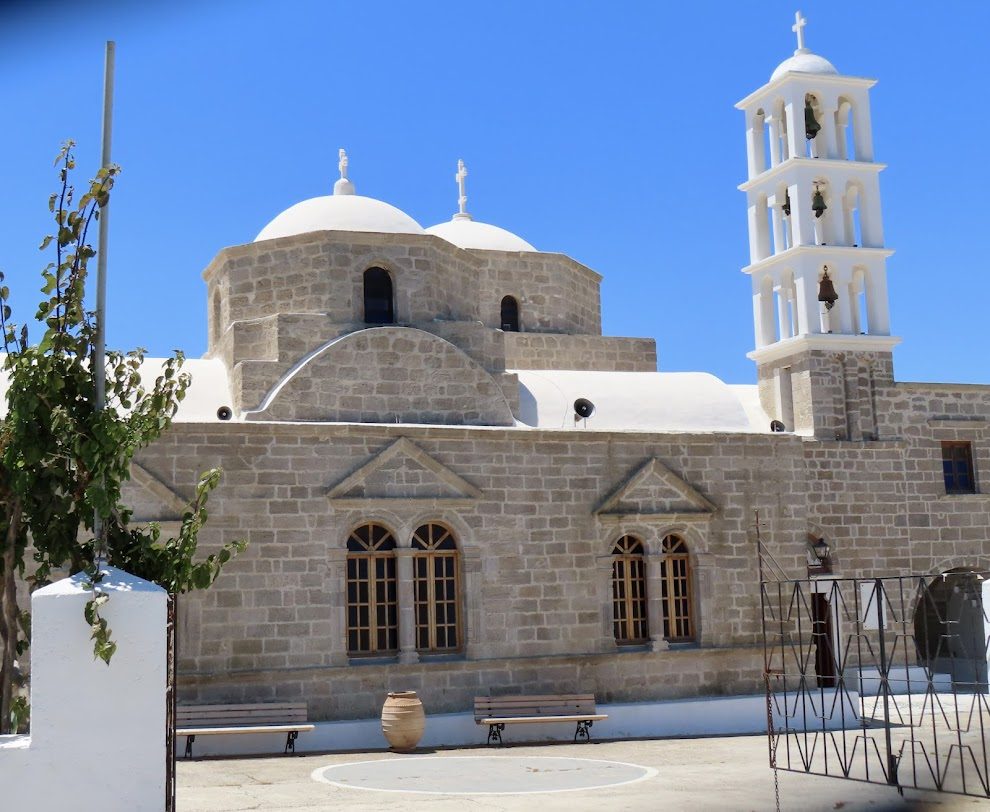
Until the 18th century, Zefyria — not Plaka — was the capital of Milos, a busy town of thousands. Then plague and toxic fumes rising from the volcanic ground drove the survivors out, and they rebuilt up in Plaka, leaving the old capital to crumble quietly back into the landscape.
Today a beautiful, well-kept church still stands among the overgrown lanes, with the ruins of the old settlement scattered around it. It's an eerie, moving place most visitors pass on the road without a second glance — and once a year, on the 15th of August, it comes roaring back to life (see below).
When the island comes alive
Festivals & Traditions
If your timing is lucky, you'll catch Milos with its heart wide open. Two windows are special: Greek Orthodox Easter in spring, and the feast days of mid-August. Here's what to look for — and where.
Easter in Plaka
Holy Week · spring
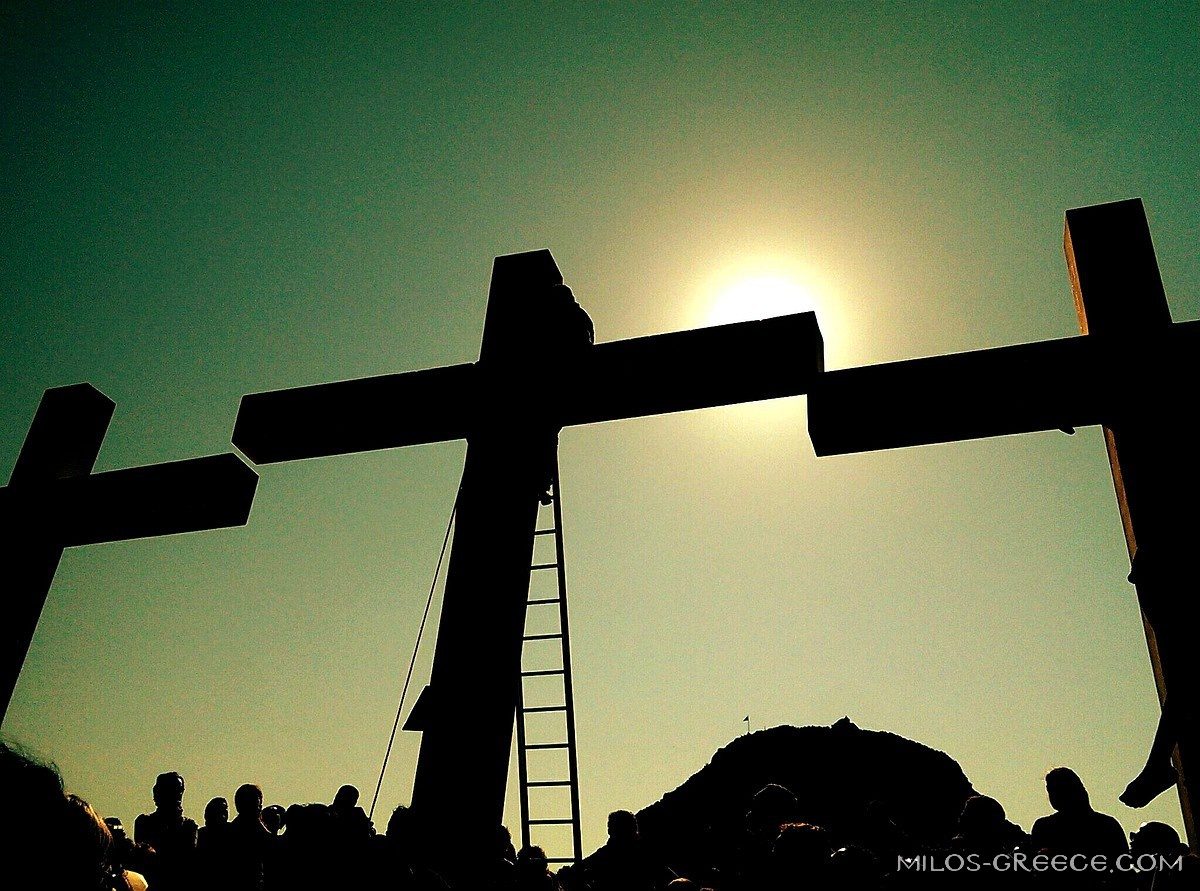
Greek Easter is the biggest celebration of the year, and Plaka — with neighbouring Plákes — is its emotional centre. On Good Friday comes the Apokathílosis, the solemn re-enactment of Christ being taken down from the cross, followed that evening by the candlelit Epitáphios procession: the flower-covered bier carried slowly through the lanes as the whole village walks behind it.
Then the mood flips. On Easter Sunday, after the church bells ring out three times, the community gathers to burn an effigy of Judas — a noisy, cathartic island tradition that turns mourning into celebration in a single afternoon.
The Panigíri at Zefyria
15 August · Dormition of the Virgin
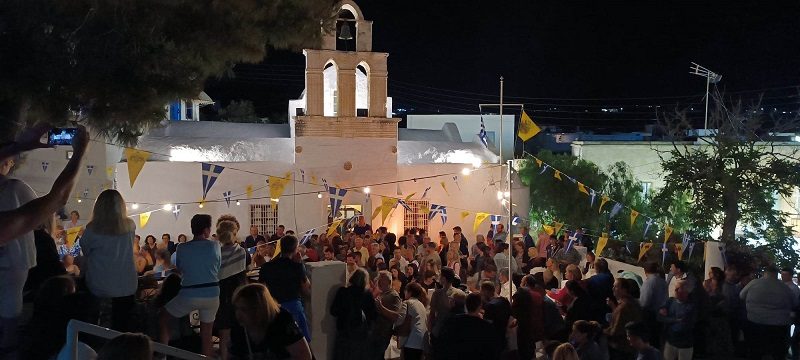
Remember Zefyria, the abandoned old capital? Once a year it wakes. On the 15th of August — the feast of the Dormition of the Virgin, Kímisi tis Theotókou — the church of Panagía Portianí hosts what many islanders consider the best panigíri on Milos.
A panigíri is a village feast: a church celebration that spills out into long communal tables of food, free-flowing wine, live music and dancing deep into the night. If you're on the island in mid-August, this is the one to find.
A different island, 20 minutes away
One Step Further: A Day Trip to Kimolos
Kimolos
By ferry from Pollonia · ~20 min
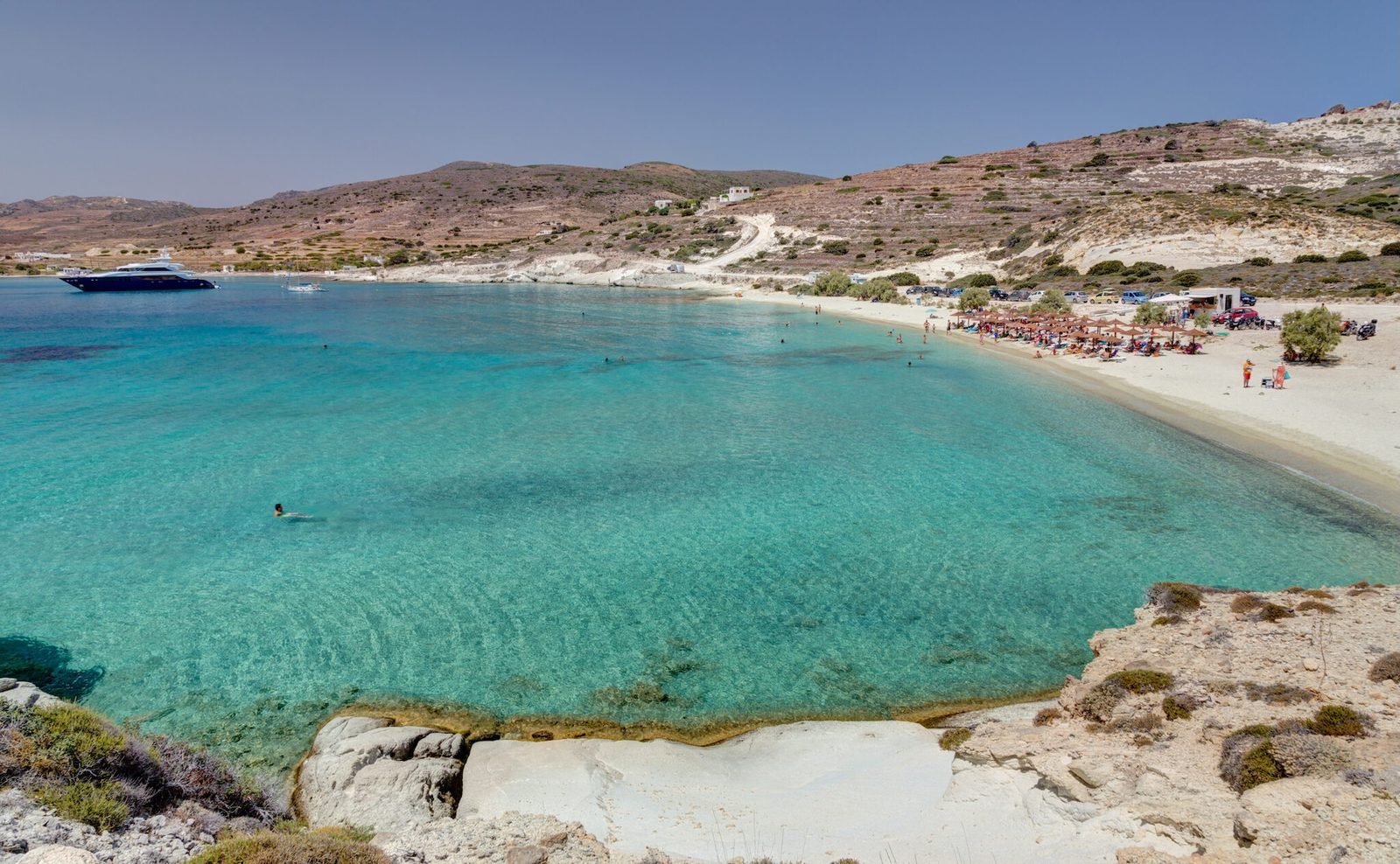
Just off the northeast tip of Milos lies Kimolos, a smaller, quieter island reached by a twenty-minute ferry from Pollonia. Most visitors never make the crossing; the ones who do tend to wonder why they waited. There's no big tourist machinery here — just whitewashed village streets, a handful of excellent tavernas, and a pace of life that makes even Milos feel hectic.
The beaches are genuinely superb and rarely crowded; the water at Prássa rivals anything back on Milos. Go in the morning, eat a long lunch, wander, and be back in time for a Milos sunset.
Since 1995, we've come to know every corner of every village on this island — the good tables, the quiet paths, the spots most guests never find, and exactly when each festival falls. Just ask when you arrive.
Make Trypiti your base.
Stay at Efi's and let our experience since 1995 shape your days on Milos.